
SIP Header-Based Routing
Flexible routing decisions based on any SIP headers
With the new SIP Header-Based Routing feature, anynode significantly expands its routing capabilities and enables flexible decisions based on any SIP header—both in classic routing and in the Request Router. This functionality is particularly valuable for carriers, SIP service providers, system integrators, and operators of hybrid UC or multi-domain environments where calls must be dynamically distributed depending on context or platform.
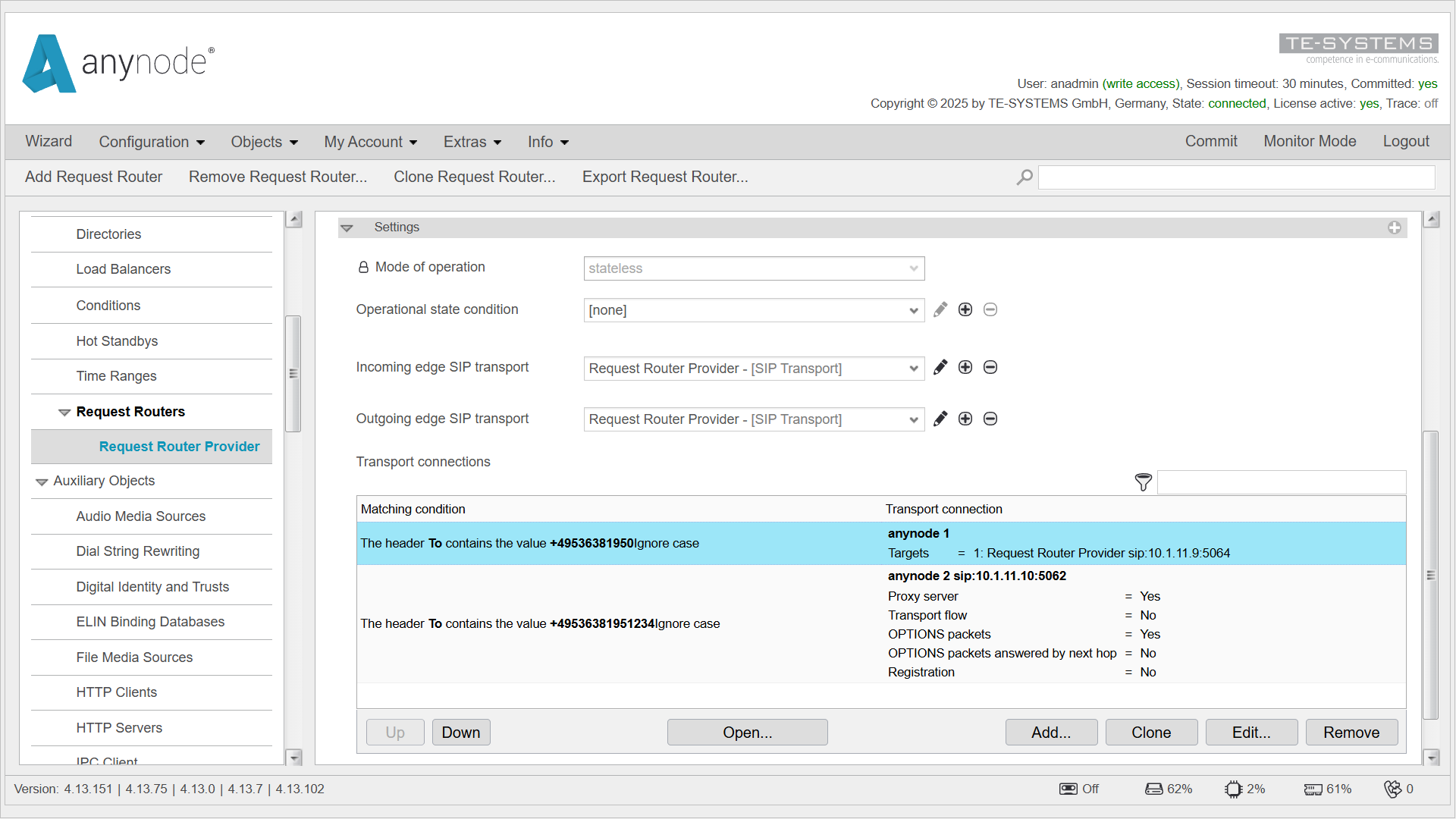
Request Router configuration with two anynode target systems. Calls are distributed to the target systems based on the TO header.
Custom headers in regular routing
In standard anynode routing, custom headers (X-headers) play an especially important role. They carry system- or customer-specific information such as tenant IDs, queue IDs, or service parameters, typically provided by contact center solutions, PBX systems, or specialized applications. This makes it possible to steer calls precisely based on these additional data points—for example, to reflect departmental structures or separate platforms
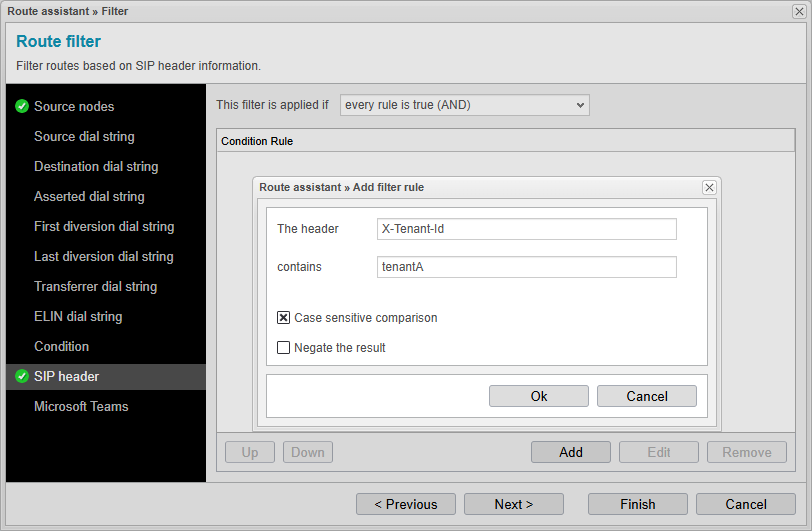
Definition of the filter in the normal Route Assistant for call distribution based on the X-tenant ID.
Precise, context-aware routing in the Request Router
In the Request Router, the new feature enables even more precise and context-sensitive control of incoming SIP connections. Instead of relying solely on traditional load-balancing mechanisms, routing decisions can now be made based on any header fields such as To, From, or P-Asserted-Identity. This makes it possible, for example, to cleanly separate traffic from different platforms—such as Teams, Zoom, or Webex—when an incoming INVITE from a provider includes appropriate X-headers. The result is a centralized, dynamic routing logic that adjusts flexibly to complex multi-platform scenarios and reliably distributes calls to the correct target systems based on defined rules.
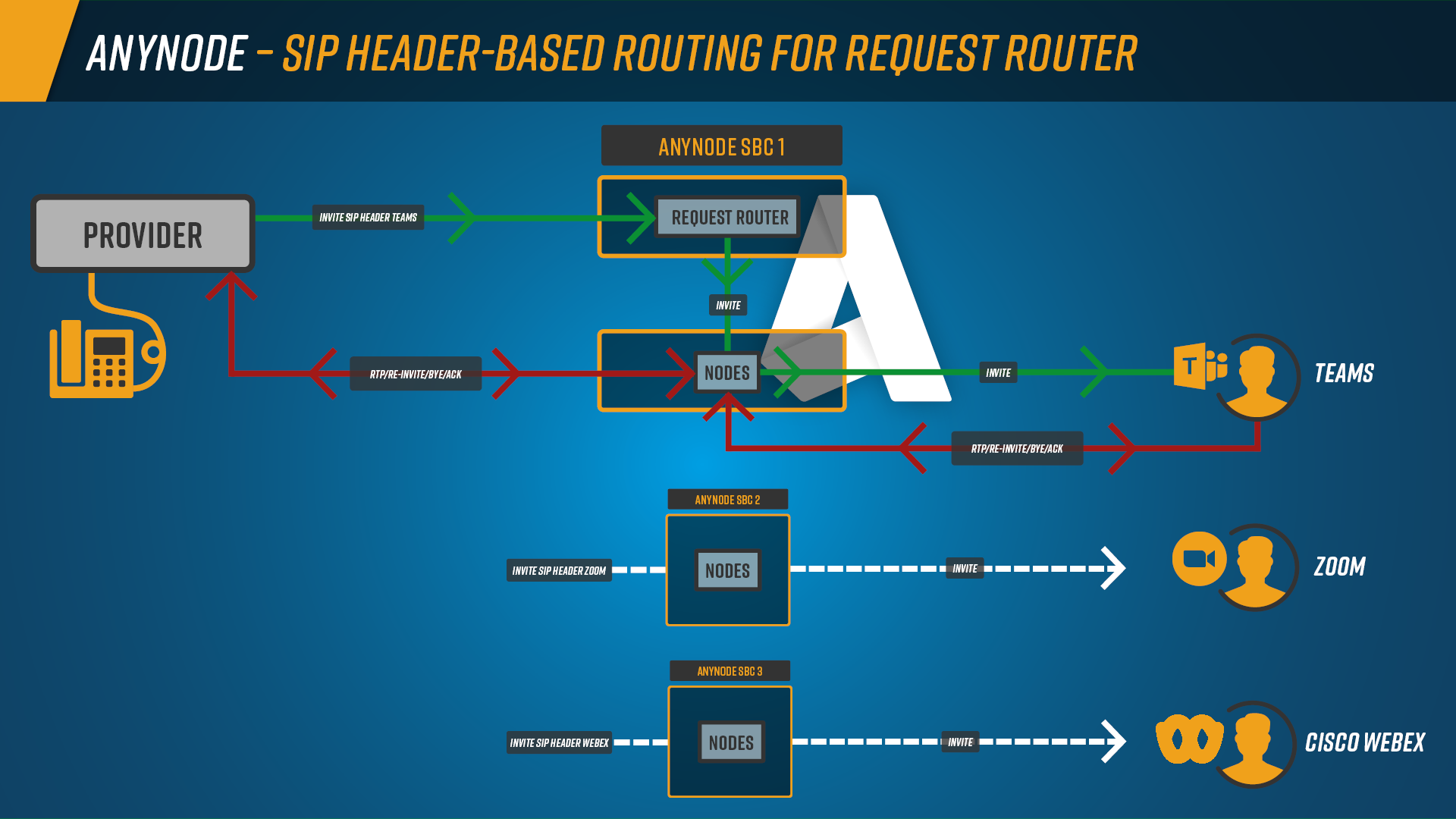
Call distribution using the Request Router based on the X-Platform header to three different anynode target systems for Microsoft Teams, Zoom Phone, and Cisco Webex.
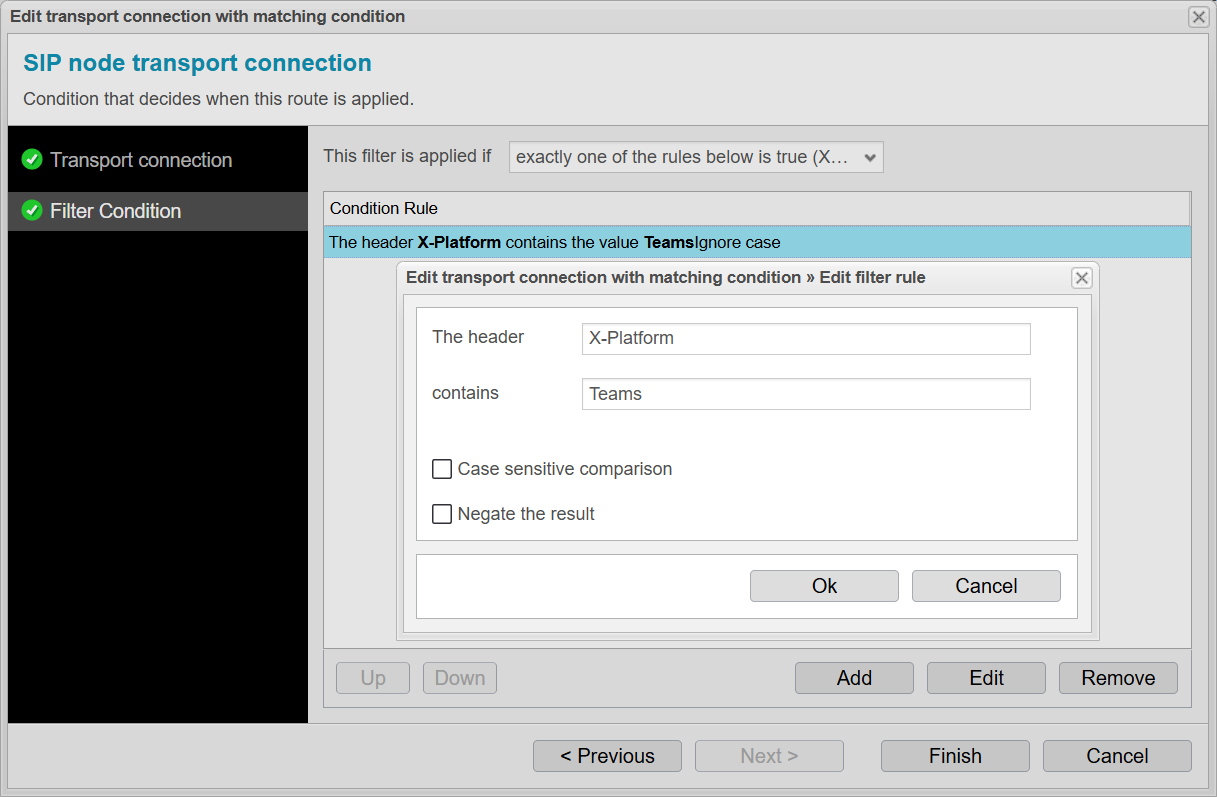
Request router configuration with definition of the filter for call distribution based on the X-Platform header.
More flexibility for heterogeneous communication environments
This enhancement not only makes routing more precise but also simplifies the integration of heterogeneous communication landscapes, where calls must be automatically routed to the correct system depending on origin platform, tenant, or service context. For operators of dynamic, scalable, or multi-tenant architectures, this creates significantly greater design flexibility—without the need for additional systems or complex workarounds.
Features at a glance
- Routing decisions based on any SIP headers
- Usable in both regular routing and the Request Router
- Flexible configuration directly within the Request Router
- Scalable through easy expansion with new platforms or routes
- Routing control based on provider and header information