

Monitoring
Reliable system monitoring through statically assigned SNMP indices
With anynode 4.14, system and network monitoring becomes significantly more reliable and stable in the long term. Especially in environments where administrators, network engineers, or operators of large SIP infrastructures work with tools such as Zabbix, PRTG, or Nagios, the new capability to permanently assign SNMP indices to specific objects plays a crucial role. Nodes, routes, or interfaces retain their index numbers even when configurations are modified or system structures change. Monitoring systems can therefore consistently access the same metrics—regardless of updates, expansions, or adjustments in the setup.
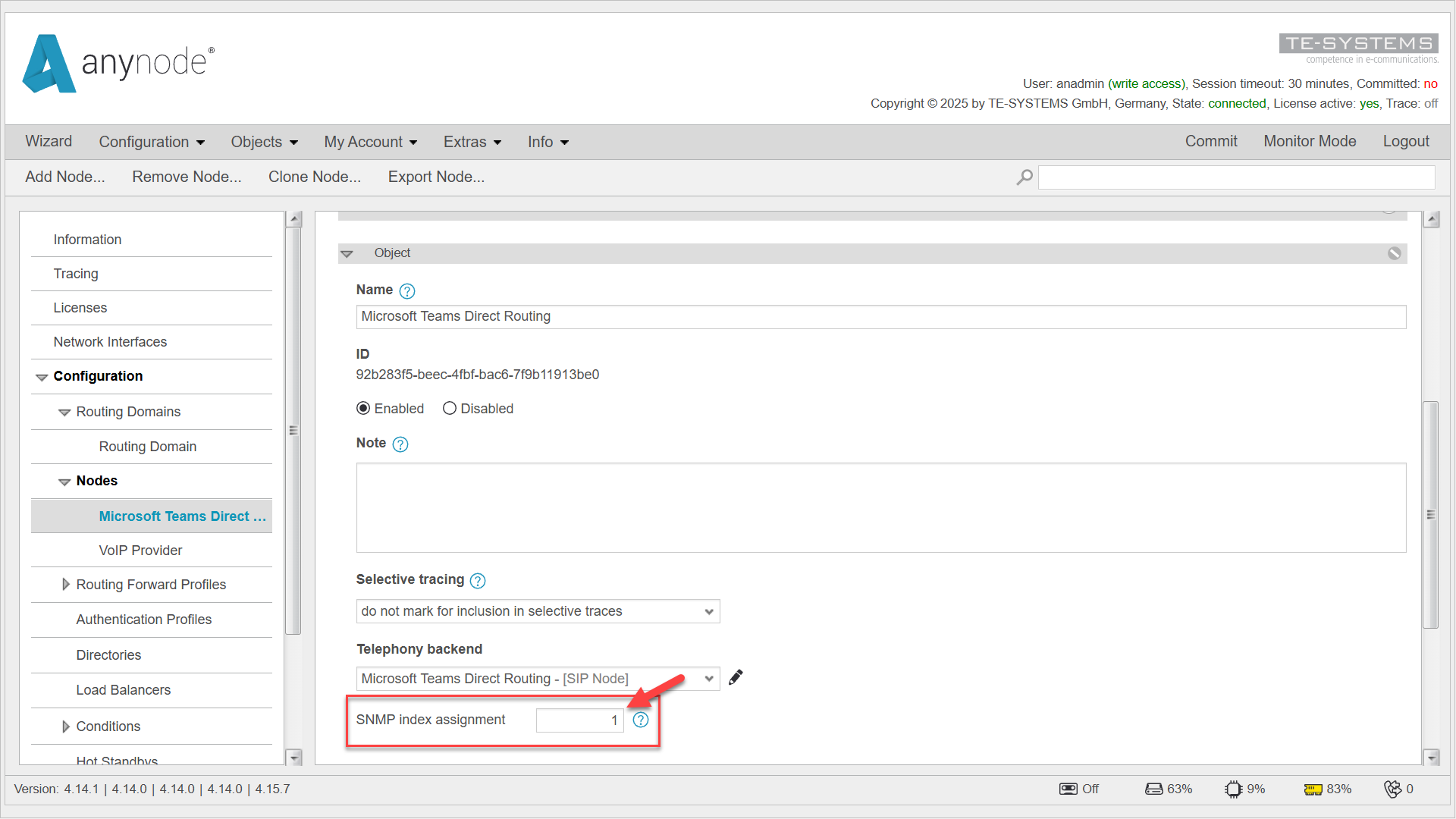
anynode frontend showing the SNMP indexing of a node.
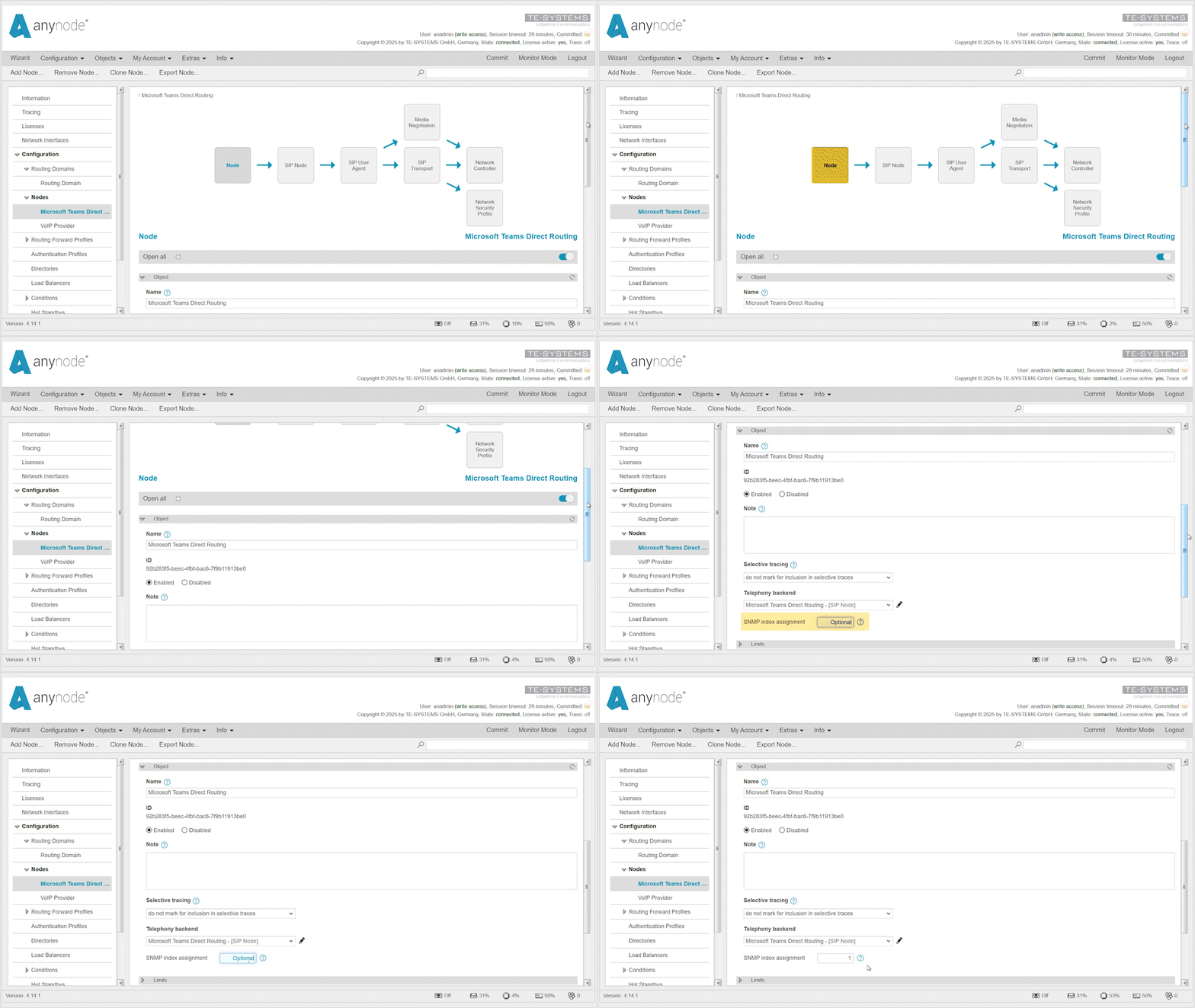
anynode frontend showing SNMP indexing for a Microsoft Teams Direct Routing node. In the external monitoring tool (Zabbix), it is read as Node 1.
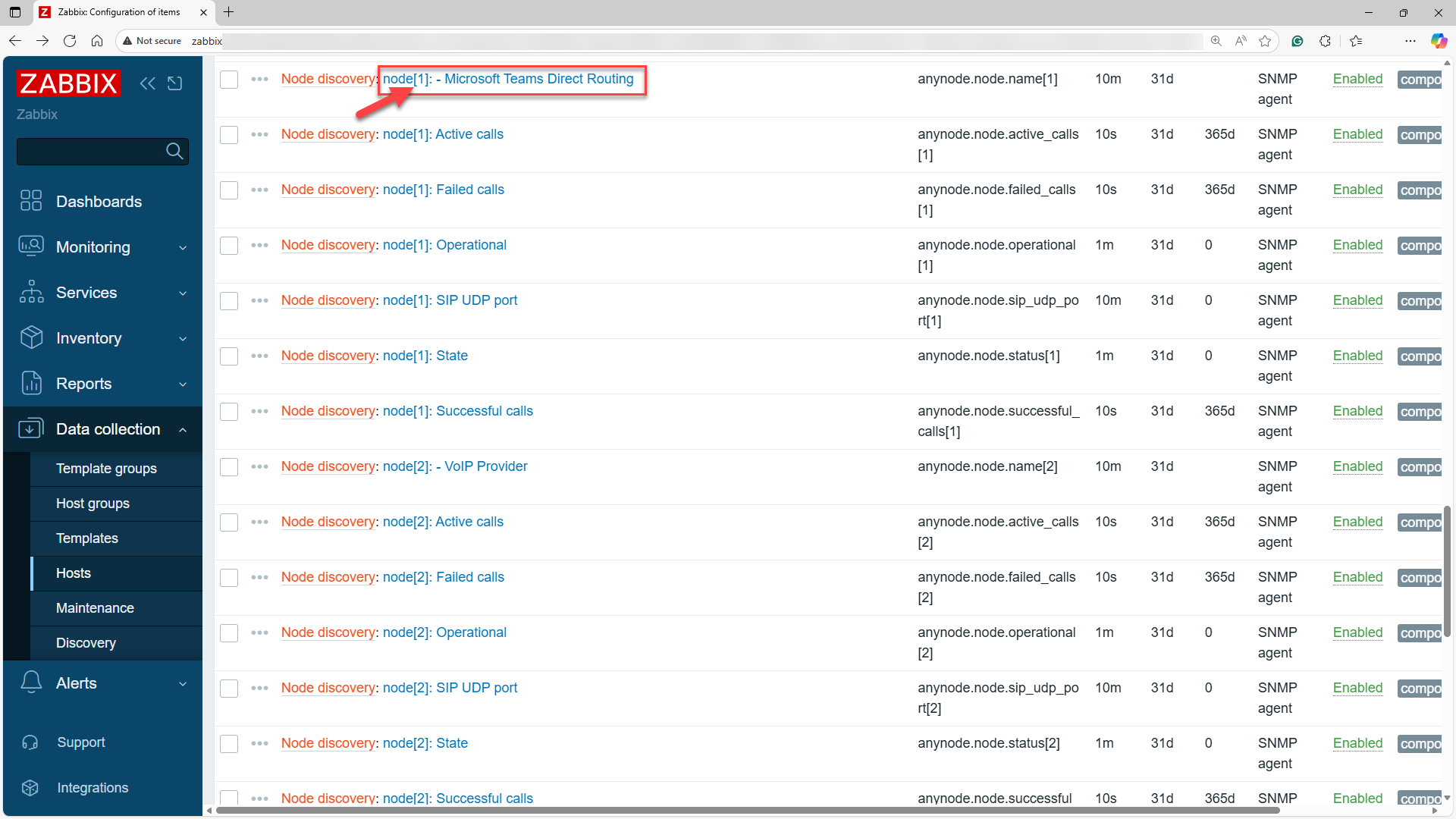
Display of anynode SNMP node data in Zabbix. Thanks to fixed SNMP index assignments, the values for nodes, call statistics, and states remain consistent even after system changes.
Reduced Effort and Increased Operational Reliability
This approach greatly reduces administrative workload: dashboards no longer need to be redesigned, triggers do not need to be adjusted, and queries do not have to be revised after every configuration change. Historical data remains comparable, which significantly simplifies long-term monitoring, trend analysis, and availability measurements in high-availability enterprise networks or provider environments. Especially where multiple anynode instances are integrated into central monitoring systems, or cloud SBCs require continuous supervision, the consistency of indices leads to a noticeable increase in operational reliability.
Extended Monitoring Data and Secure Access Control
In addition, anynode 4.14 expands the scope of monitoring information with more detailed data on Hot Standby status, additional MIB entries, and new traps for system and link status changes. Administrators can precisely control both SNMP and WMI access, with access disabled by default for security reasons. This flexibility ensures that both traditional data center environments and modern cloud or hybrid infrastructures can be reliably monitored at all times—with maximum transparency and minimal administrative overhead.
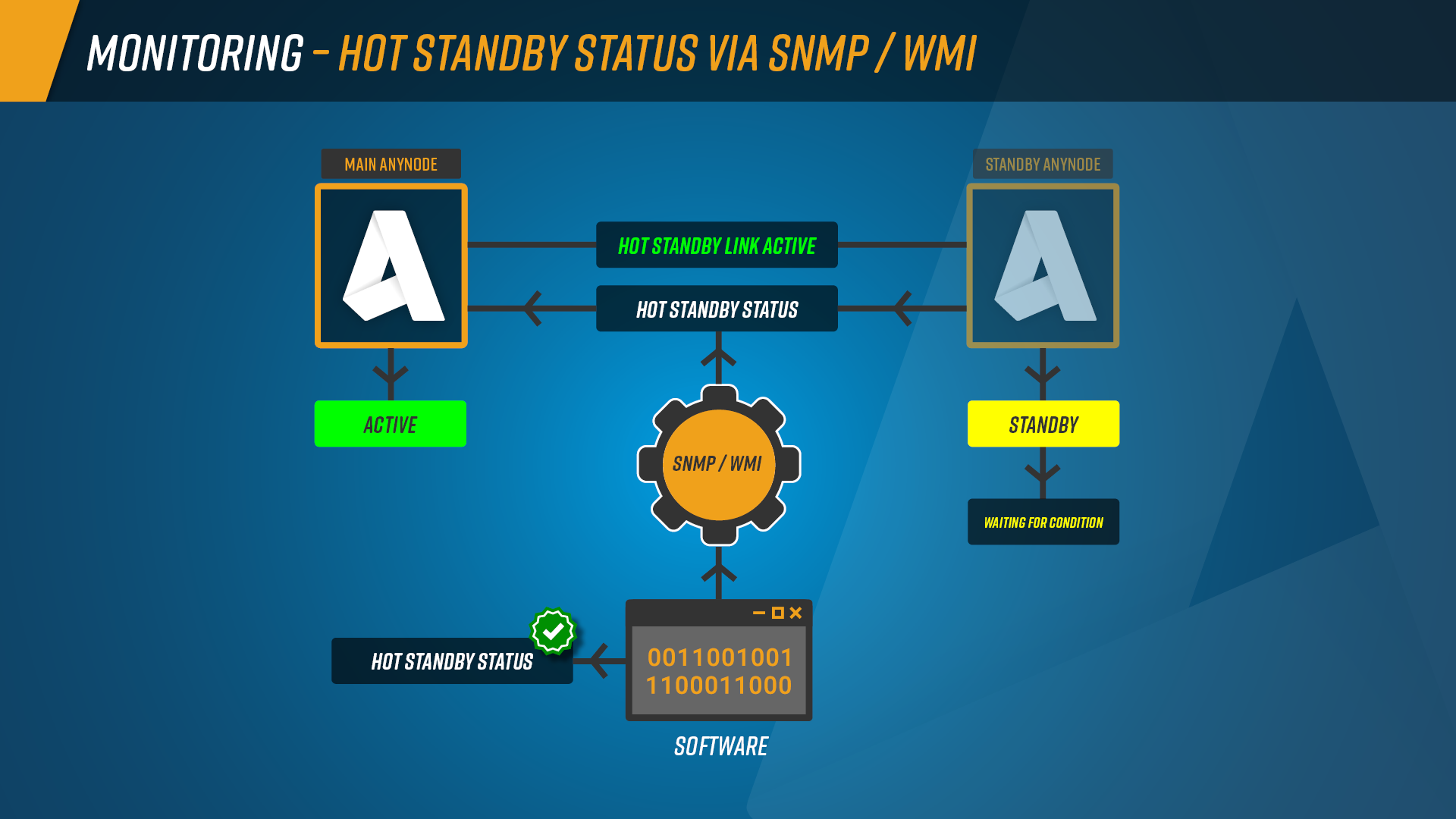
In a hot standby environment with two anynode systems, the hot standby status is monitored by an external tool via SNMP.
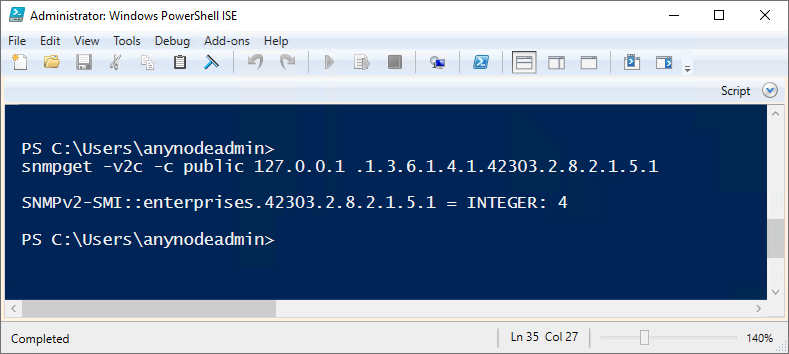
SNMP query via Windows PowerShell ISE for the Hot Standby link status. A value of 4 indicates “link active.”
Features at a glance
- Permanent assignment of SNMP indices to objects
- Reliable and consistent monitoring data, even after system changes
- Reproducible metrics and stable graphs in external tools
- Extended anynode MIB with Hot Standby status and traps
- Performance optimization of the Windows SNMP Extension Agent
- Configurable access control for SNMP and WMI (disabled by default)
- Support for WebRTC nodes in SNMP and WMI
- Extended REST API with additional monitoring and control functions
- Improved analysis capabilities in the Trace Analyzer
- Parallel CPU core view in Monitor Mode