WebRTC
Direct integration of real-time communication into browser-based applications
The anynode WebRTC API enables real-time communication to be integrated directly into browser-based applications – ideal for modern call and contact centers, web-based support platforms, or specialized business applications that require fast and seamless communication. A single click on a secure browser link is enough to establish an audio or video connection, allowing web-based customer or agent routing to fit smoothly into existing processes. In many scenarios – such as customer service, telemedicine platforms, or web-based field service solutions – users can make voice or video calls directly from within a web portal’s interface without needing to install additional software
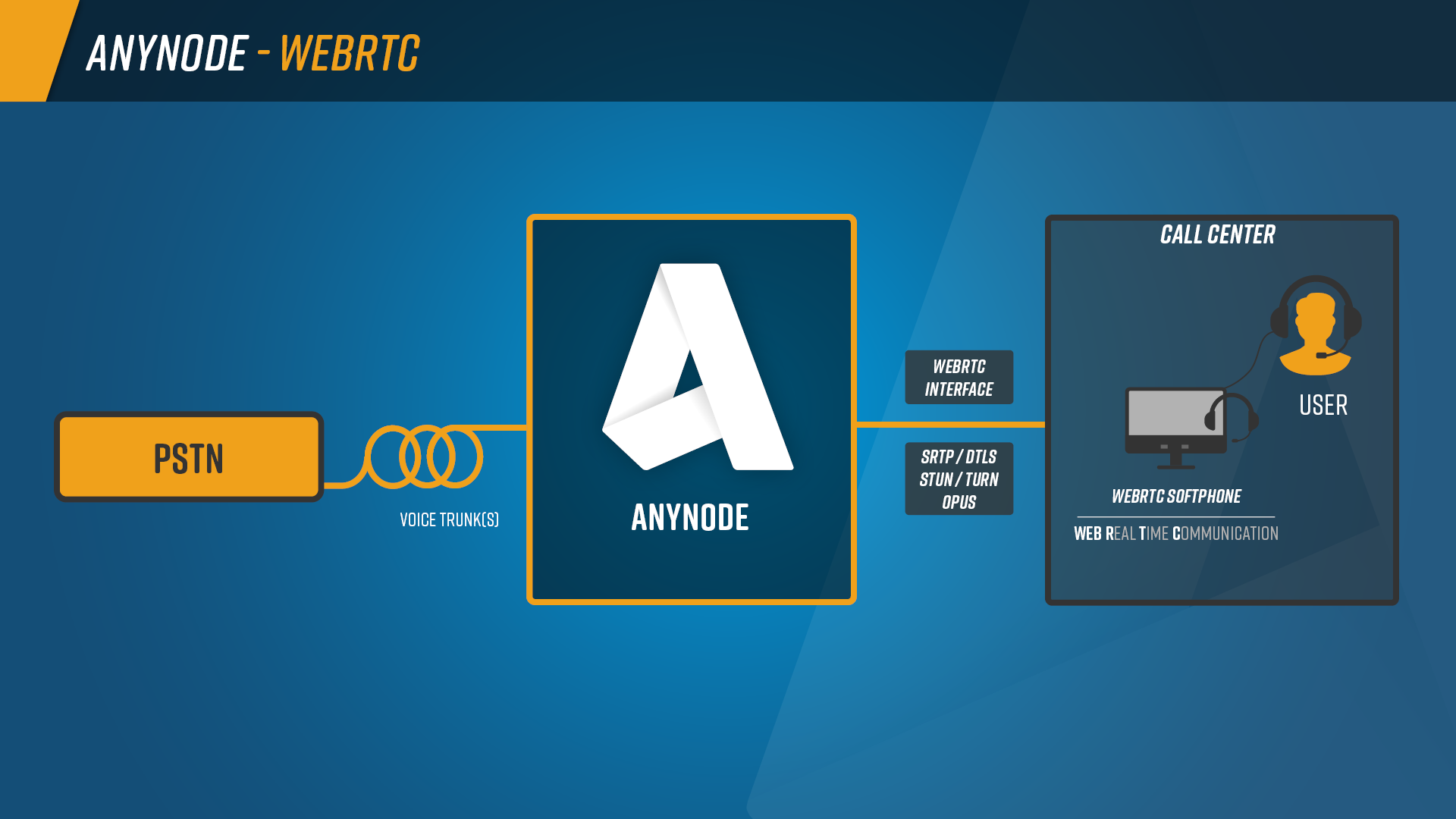
Voice calls from the PSTN are routed through anynode to browser-based WebRTC softphones. This enables real-time communication in the call center directly in the browser, encrypted via SRTP/DTLS.
Cross-platform and highly flexible
The solution operates across platforms and supports all major browsers, including Chrome, Edge, Safari, and Firefox, as well as WebView-based apps on iOS and Android. This makes it ideal for system integrators and providers developing or operating browser-based communication solutions. At the same time, anynode’s configuration remains flexible: adjustments to authentication directories, numbering logic, or TLS ports can be made at any time during operation – a major benefit in dynamic service environments or solutions that are frequently updated or expanded.
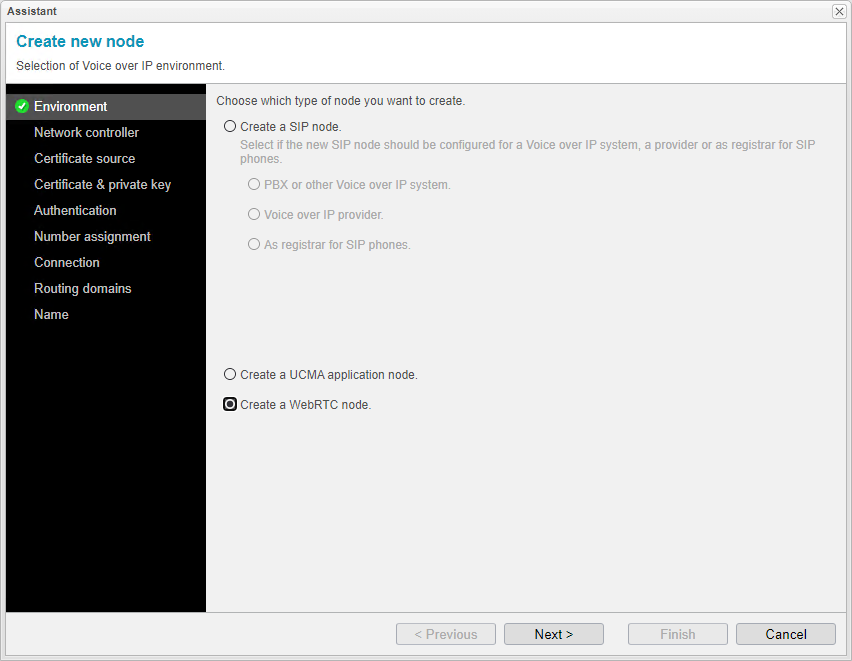
anynode frontend with the wizard for creating a WebRTC node and the option to add users for WebRTC in a user directory.
A seamless user experience for web applications
This direct integration creates a seamless user experience: customers can initiate an encrypted video call via a button in an online support portal, while agents handle the connection like any regular SIP call. Professional web applications – such as those used in telemedicine – can also be enhanced with secure audio and video communication without requiring additional applications or special client software.
Predictable licensing per registered WebRTC user
The anynode WebRTC license is assigned per registered WebRTC user. This means that as soon as a user registers via WebRTC in anynode – for example, through a browser-based softphone or a web app – they require their own license. Whether the user is actively making calls or not does not matter: every registration counts as a WebRTC user and occupies one license. This provides clear and reliable planning: companies always know exactly how many WebRTC workstations they need.
Features at a glance
- Easy integration into web applications and customer portals
- No additional software or app installation required
- Native audio communication in the browser (WebRTC APIs)
- End-to-end encryption via wss:// (TLS)
- Certificate management with Let’s Encrypt, ZeroSSL, GoDaddy, Actalis, or other ACME-compatible CAs
- Flexible authentication via static or database-backed directories
- Dynamic number assignment with validation options
- Cross-platform use on desktop and mobile devices
- Configuration changes possible during operation
- An additional license is required for each registered WebRTC user